A Music Program for Young Men to Build Confidence
Building a Music Program That Meets Students Where They Are
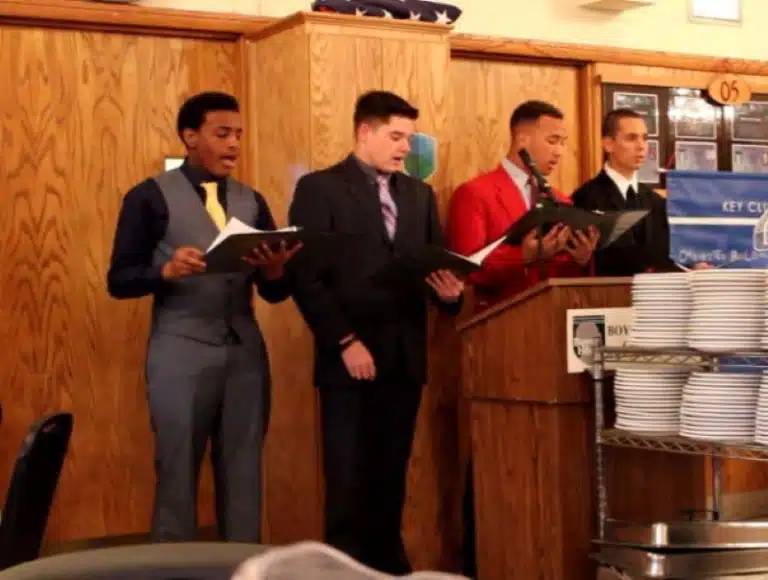
Drums are loud— recorders squeak. Twelve middle school boys trying to play Ode to Joy together sounds like… well, exactly what you’d expect.
But music instructor Beverly Johnson heard something different when her students performed last year. She heard young men who didn’t think they could do it actually doing it. She heard confidence building with every note.
“To me, it was beautiful,” she says.
Boys Home’s music program gives students a chance to try something new—an elective class where they can pick up instruments, mess around with rhythms, and discover they’re capable of more than they thought. For some students, it becomes a passion. For others, it’s just a class they don’t dread. Either way counts as a win.
Building a Music Program That Meets Students Where They Are
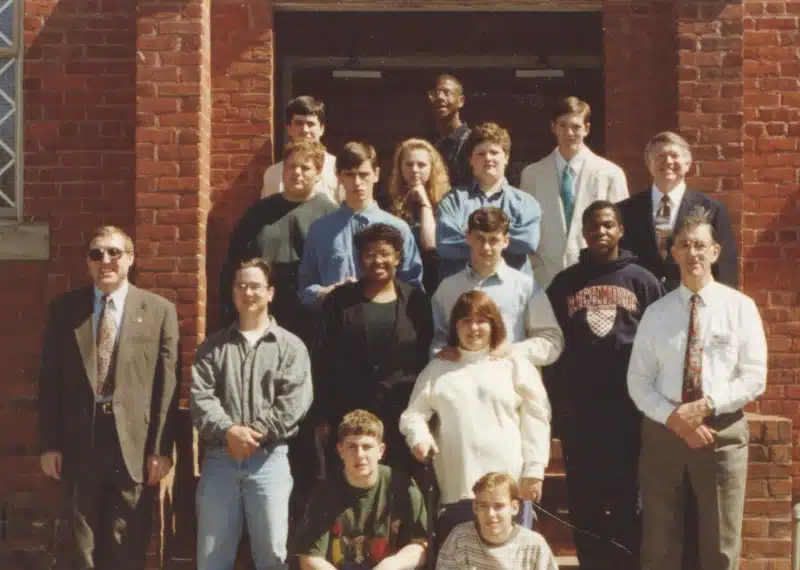
Boys Home’s music program runs as an elective, meaning students choose to participate. Classes typically include six to seven students at a time, still small enough for individualized attention.
“It’s music. It’s kind of like PE – you’ve got to have input in order to have the class,” Beverly explains. The program balances structure with flexibility, meeting students at their skill level while challenging them to grow.
What Students Learn:
- Music Theory Basics – Notes, staff, rhythms, and how to read music
- Instrument Skills – Primarily recorders and drums, with exposure to brass instruments
- Music History – Composers, genres, and cultural context
- Performance Skills – Building confidence to play for others
- Emotional Expression – Using music as a healthy outlet
The curriculum covers everything from classical composers to Broadway, country to carefully selected rap. Students learn that music crosses all boundaries and cultures.
Starting Where Fear Lives
Many students arrive at Boys Home believing they can’t do music. They’ve never tried an instrument. They think boys don’t sing. They’re afraid to look silly in front of their peers.
Beverly meets that fear head-on with accessible instruments and creative teaching. Recorders become the foundation because they’re easy, accessible, and most affordable. Students learn the full scale while building confidence with an instrument that doesn’t feel intimidating.
When students insisted, “boys don’t sing,” Beverly handed out kazoos. Students hummed into them, having fun without realizing they were revealing who could carry a pitch. Now several students have volunteered to try singing.
“I want them to have a safe place to express themselves,” Beverly says. “Not everybody can play a sport. Not everybody can do music either. So there’s got to be a median in between. I want music to be that outlet where they can express themselves freely.”
Instruments and Resources
The program currently includes:
Core Instruments:
- Recorders (main teaching instrument)
- Various drums (donated by community members)
- Percussion instruments (maracas, cymbals, tambourines)
- Piano keyboard
- Bells for seasonal music
On Loan from Local Musicians:
- Trumpet
- Trombone
- Baritone (euphonium)
- Other brass instruments for demonstration
The music community’s support has been crucial. Beverly’s connections through the Alleghany Highlands Arts Council help bring borrowed professional-quality brass instruments so students can see and hear them, even if the program can’t afford to purchase them yet.
When the Drums Come Out
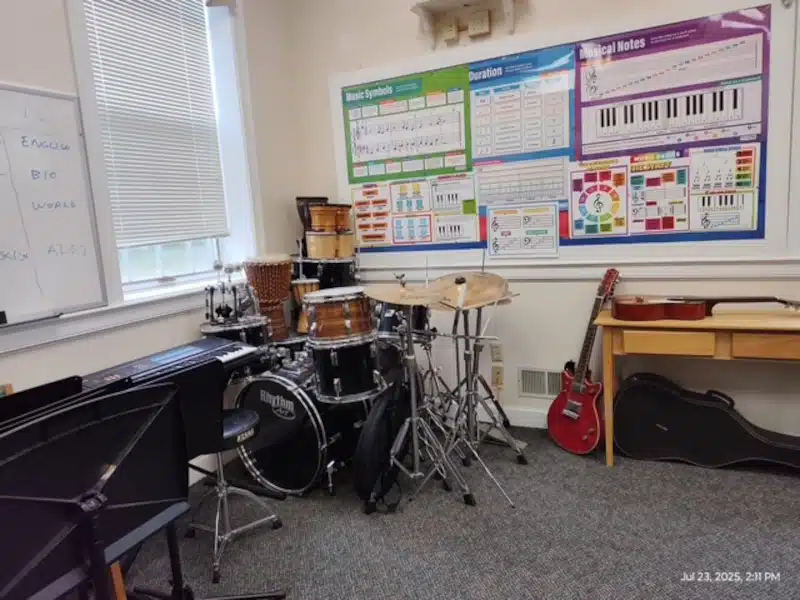
Music serves another critical function at Boys Home – emotional release. On days when frustration builds (as it does for any 11-to-14-year-old), Beverly knows what to do.
“That’s when I get the drums out, or I get something that they can go to town on,” she explains. Students beat out rhythms, releasing tension in a constructive way while still learning about music.
One recent class focused entirely on drums from different cultures—African, Asian, Indian, Japanese, Jamaican, and Haitian. Students learned that drums are found everywhere in the world, played differently across cultures, and all express universal human emotions.
“These kids get a taste of the world through music,” Beverly notes. “Music is universal.”
Building to Performance
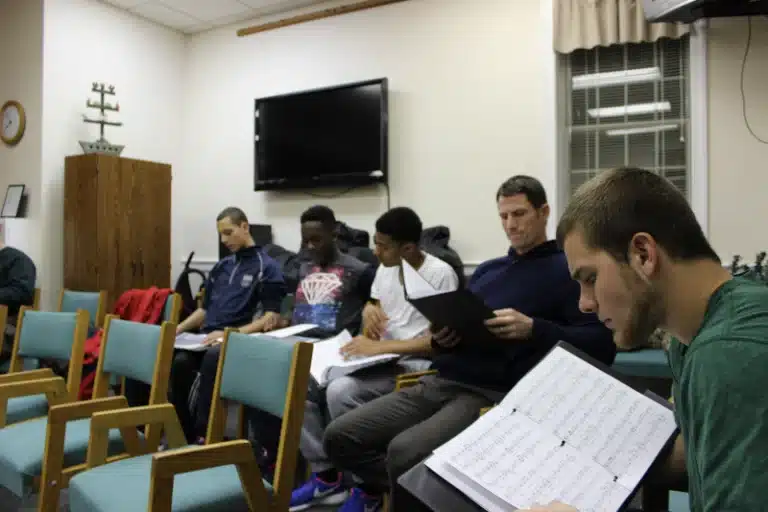
Last year, students performed Ode to Joy on recorders during chapel—12 of them together from two combined classes. Beverly introduced them to Beethoven through multiple versions of the piece, including the energetic “Joyful, Joyful” from Sister Act Two.
“They got the biggest kick out of that,” she remembers. “They ended up wanting to learn to play Ode to Joy on their recorders. And they pulled it off. It was the most beautiful sound I ever heard.”
This year, students are working toward Christmas performances with plans for:
- Individual or small group recorder pieces (students choose from five different carols)
- Potential recorder and drum combinations
- Both traditional sacred music and fun secular songs
- Possibly vocal performances from brave volunteers
Some students walk around with recorders in their backpacks, ready to play for anyone who asks. Others need more time before performing publicly. Beverly respects both approaches.
Through Beverly’s work with the Alleghany Highlands Arts Council, Boys Home students gain access to professional performances they might never otherwise experience.
Community Performance Opportunities:
The Arts Council’s community concert series brings five to six performances to the area annually, with donated tickets for Boys Home students.
Upcoming events include:
- Richmond Ballet performance
- Roanoke Symphony Pops with Handel’s Messiah (December)
- Various visiting musicians and ensembles
- Children’s theater series in summer
“I am making it my personal mission to make sure that at least all my music students get to every concert,” Beverly says. Last year, all her students attended local choral performances, giving them exposure to professional-level live music.
Beverly and history teacher Mr. Colby Lowery (a James Madison University Marching Dukes alum) plan their own performance for students—Beverly on baritone, Mr. Lowery on his instrument.
Music as Life Skill
Behind all the notes and rhythms lies something deeper. Beverly talks about music being math (breaking down rhythms), a foreign language (brain translating notes to sound), and science (vibration and frequency).
Research supports what Beverly sees in her classroom: children who participate in music tend to have higher IQs, think more critically, and develop into more empathetic individuals.
Back in high school, someone told Beverly, “Music is what happens when words aren’t enough.”
“I want them to have an outlet. Every child needs that, and in a constructive way.”
For students dealing with frustration, uncertainty, or difficult emotions, music provides expression without requiring verbal skills they might not have developed yet. The satisfaction of successfully completing a piece, contributing to a group performance, or simply making sound come from an instrument builds confidence that extends beyond music class.
Finding What Belongs to Them
Beverly’s personal philosophy drives everything she does: “Music saved my life. It gave me something that was mine, and it opened up doors I would not have had the opportunities for.”
She watches for students who might have that same spark. “If I’ve got a kid that comes through here that I see that in, I am going to try to open every door I can for that child.”
The goal isn’t to turn every student into a professional musician. It’s simpler and more profound than that.
“Out of 10 students, you’ll be lucky if you have one that not only excels but wants to go forward,” Beverly acknowledges. “If I can find one, then I will have passed it on – that someone else loves it, and maybe they’ll pass it on to someone else. I’m not asking a lot. I just want to spread it around.”
Music for Every Student
The music program remains open to any student who wants to participate. No previous experience required. No natural talent necessary. Just a willingness to try.
For some students, music becomes a passion. For others, it’s simply a class they enjoy. For a few, it might become the thing that opens doors they didn’t know existed.
Contact us today to learn more about how Boys Home’s comprehensive program — including our growing music curriculum — helps young men discover their potential and find their voice.