
Coaching Combines Accountability and Care
From Speaker to Teacher (and Coach!)
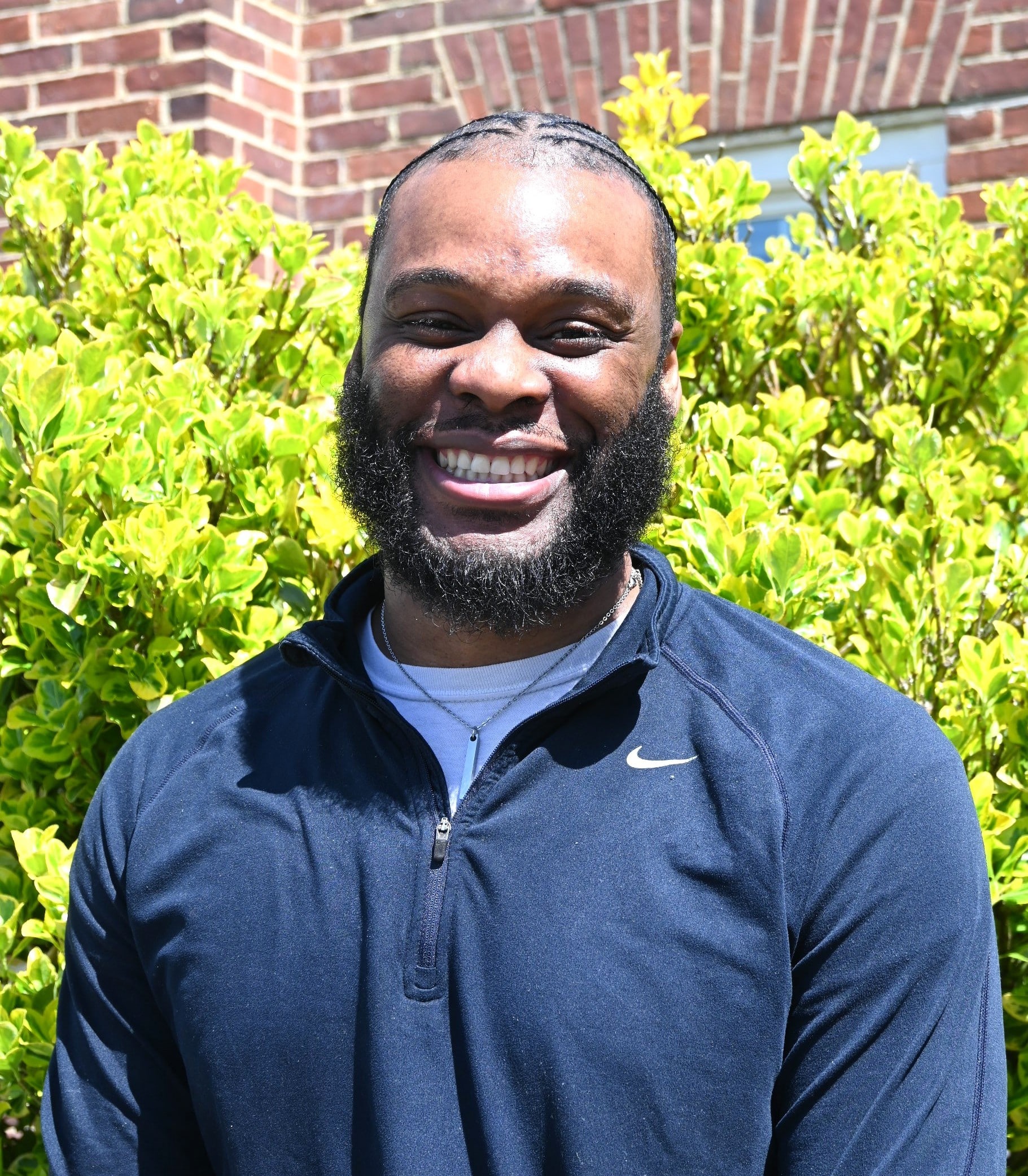
Three years ago, Vince Wyatt showed up at Boys Home of Virginia to speak in the chapel. He hadn’t planned to stay. But somewhere between meeting the students, walking the campus, and realizing this place was something different, the idea took root.
When a position opened up — teacher and basketball coach — he applied. Chris Doyle called, and Vince said yes to both without hesitation.
That’s how it started. And now, with a new school year underway and a basketball season ahead, Vince is exactly where he says he’s supposed to be.
The Road That Led Here

Vince didn’t set out to become a teacher or a coach. He ran track at Radford University on a scholarship, went on to grad school at Western Kentucky, and somewhere in the middle of volunteering as an assistant coach, something clicked.
“Every time you try to teach someone something, and it works, you just want to build on it,” he says. “Coaching just knocked me right upside the head.”
Teaching came a little differently — he describes it as accidentally sliding into it — but once he was in, he stayed. He went on to work as a special education teacher, an athletic director at two different schools, a track coach, and a PE teacher before landing at Boys Home. Every role built on the last one.
His connection to Boys Home started before the job posting.
That summer, he spoke at two Juneteenth events in the community about unity, perseverance, and resilience. Asianna Holloway, Development Operations Manager, was in the audience at one of them. She reached out afterward and asked if he’d be willing to come talk to the students at Boys Home. He said yes and made such an impression that, when the Class of 2024 needed a graduation speaker, they asked him back.
By the time the job opened up, Boys Home was already in the back of his mind.
Why English, Why Basketball
Vince teaches middle school science and English, and if you ask him which one he loves most, he doesn’t hesitate.
“English allows me to teach with real-life scenarios,” he says. “Whether it’s parts of speech or reading a book, every example I create, I can make it their real life. I can make it a Boys Home example. And they’ll answer, ‘yeah, I felt like that,’ and then you put the lessons together with what they already know.”
There’s also a practical aspect he appreciates: students will need English no matter what path they take. It’s not just a subject. It’s a skill that follows them everywhere.
On the basketball court, his approach carries the same philosophy. He’s direct about what he expects, honest when things aren’t working, and deeply committed to the idea that getting better is the whole point, not just in the game, but as a person.
“I come from a place of love, a place of accountability, and a place of we’re all human,” he says. “I tell them all the time: I’m fine with you being bad at something. I’m fine with you screwing up. What I’m not fine with is us not making the proper adjustments. Either we win games, or you become a better person. Or both.”
Research backs up what Vince already knows intuitively. Studies show that coaches who combine accountability with genuine care — what researchers call transformational mentoring — consistently produce stronger outcomes in young athletes: not just in sport, but in confidence, character, and life skills.
A Story That Connects
What makes Vince particularly effective at Boys Home isn’t just his coaching philosophy. It’s that when he sits down with a student who’s struggling, he usually has a version of the same story.
“I don’t come from a place of privilege. I don’t come from a place of a person who has had it all,” he says. “I relate to a lot of these boys in ways that our stories kind of work together. I’m not a perfect human being. If they can see me in the light of being a teacher, a coach, a speaker — someone that looks like positivity — it could be them. Because I am just like them in many ways. I just chose a different route.”
He tells them he’s still figuring things out too. That honesty matters more than he could have predicted.
The mentor who shaped him most was his high school track coach, Sherwood Casey, a man Vince describes as a grandfather figure with all the wisdom that implies, and a delivery style that leaned hard into tough love.
Coach Casey showed up to his classes unannounced, helped him prep for his ACT and SAT, and demonstrated a level of personal investment that Vince credits with his scholarship to Radford and eventual induction into the Hall of Fame. He was, as Vince puts it, more than a track coach; he was a father figure.
That experience shaped how Vince shows up for students now.
What He Wants People to Know
Ask Vince what he’d tell a family considering Boys Home, and he gives you the full picture without softening it.
“This is a place like no other,” he says. “It’s a safe place. A place that provides opportunity. A place that allows you to become a man right in real time. You learn structure. You learn brotherhood. You learn a different level of respect and appreciation. Boys Home is like a jump on life in general. You get introduced to hunting, fishing, trades, groundswork — all while getting a legit education. You get the total package experience of how to grow and be a young man that’s ready for society.”
He’s excited about this year on both fronts: watching his students grow more confident in the classroom, and seeing what this group of athletes can do together on the court. They’re fast, he says, athletic. And he’s looking forward to seeing how they handle their own progress.
“I see myself in a lot of these kids,” Vince says. “My purpose is to connect — through education, through sports, through whatever they need. Boys Home allows me to do that on every level. And it’s fun. Most days.”
If you’d like to learn more about the people who make Boys Home of Virginia what it is, connect with us today. We’d love to introduce you to The Hill.